

The Quaint and Complicated Christmas Dinners of 100 Years Ago

What we make for the holidays certainly has changed over the years. When we compare what graces our tables now to what our ancestors were eating a century ago, it isn’t just the absence of canned whipped cream or other conveniences that have become annual staples. Christmas dinners 100 years ago, while very special, were sometimes cobbled together from what was on hand.
We think of Christmas dinner as being ham or turkey, occasionally something a bit more unconventional like a roast chicken. But, around the turn of the century into the ’50s it was not uncommon to have any number of possible meats on the menu. Roast beef, pork crown roast, baked fish or even wild venison served for the main dish. As TV and other media presented the All American Christmas dinner, the variety of meats deemed appropriate for the holiday meal shrank.
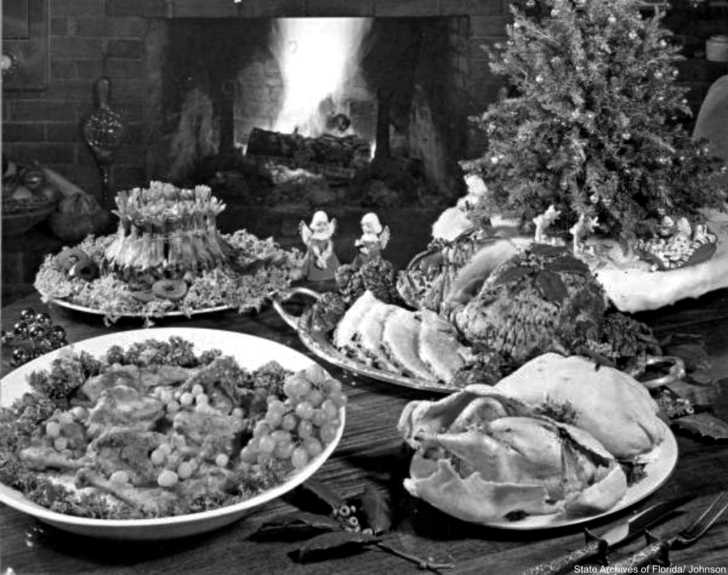
But, the nation’s spending habits were also rapidly changing. As the middle class increased in number after World War II, the idea that one would simply roast whatever meat was on hand fell away as families could now plan ahead for the roast of their choosing.

Consommé, tomato soup, game soup, or even gumbo were common items to be served at the Christmas table. Today it’s rare that you find soups and stews being served on Christmas Day.

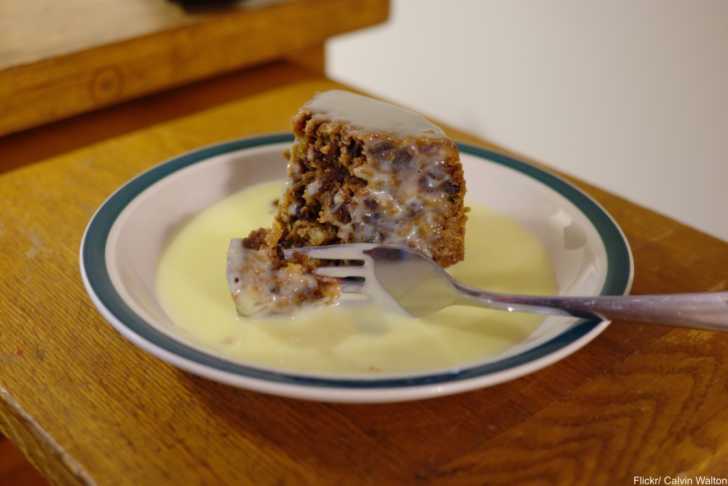
Christmas pudding and mincemeat pie are just two of the many English dishes which, 100 years ago at least, were still being served as special holiday dishes in the U.S. Available pre-made in cans and mentioned in many a cookbook, English style puddings were quite common up until the years following World War II.

Often interchangeably referred to as plum pudding or Christmas pudding, the type of dried fruit inside can vary quite bit. The popularity of plum pudding over many centuries at one point hinged on the the fact a pudding can last for up to a year, but this is not such a selling point in our modern age of convenience.
Add to the changing times that each family has their own unique holiday traditions, and it’s no wonder that what we’re serving on our holiday tables is so different from what was being had 100 years ago.